PhenoFocus
At PhenoVation, we're passionate about advancing agricultural sciences through innovative phenotyping technologies. PhenoFocus is your go-to source for insights, breakthroughs, and stories from the world of crop research and precision agriculture.
Here, we share expert knowledge, industry trends, and discoveries that shape the future of sustainable farming. From in-depth research articles to success stories and behind-the-scenes looks at our technology, PhenoFocus is designed to inspire, inform, and spark collaboration across the agricultural community.
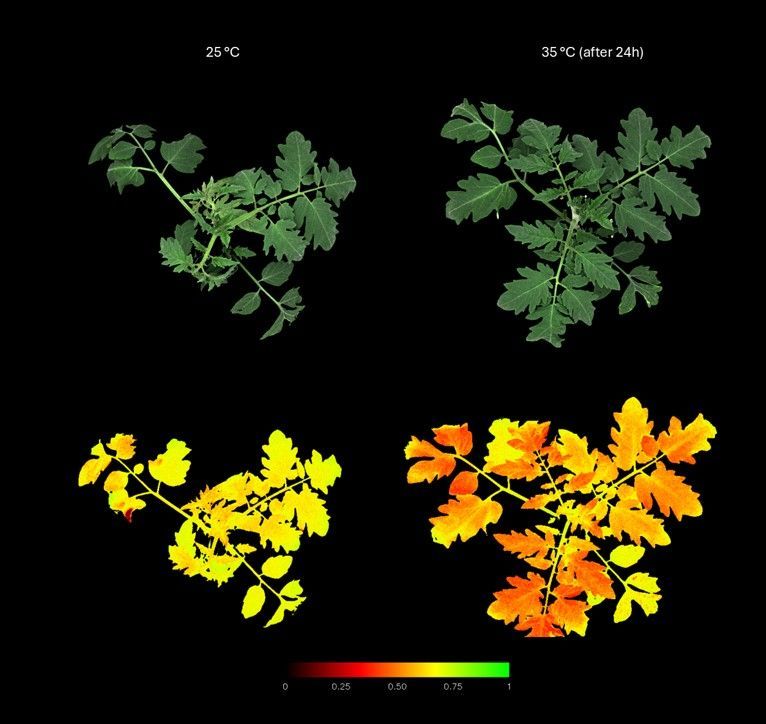
Many of our standalone camera systems are used in plant research to non-destructively provide detailed insights into plant performance. The most popular measurements are those of photosynthetic efficiency. In combination with other measurements like chlorophyll content and morphological traits (see our website or related blogs), these parameters can help answer difficult research questions.
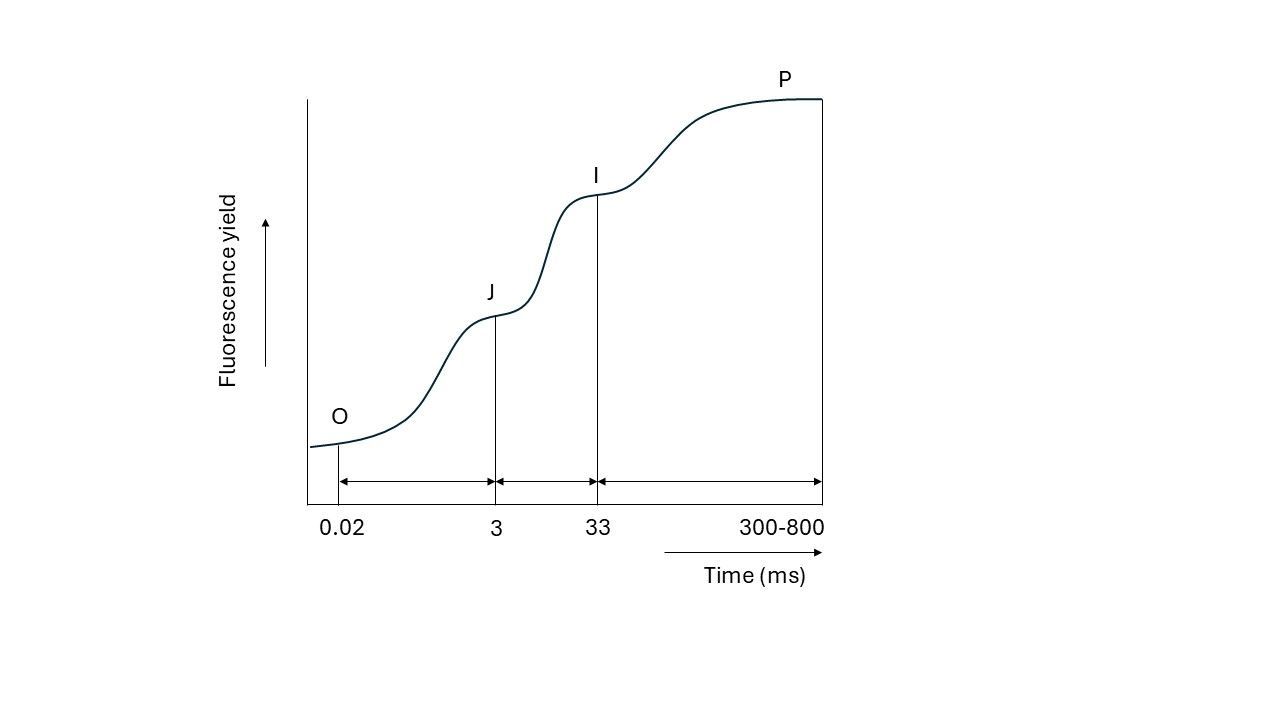
OJIP is a measurement method used to study chlorophyll fluorescence kinetics in detail, specifically the rapid initial rise in fluorescence during a saturating light pulse. This rise reveals information about energy fluxes and electron transport within the photosynthetic apparatus. In Part 1 of our OJIP blog series, I explained which physiological processes cause this characteristic fluorescence increase. In Part 2, I will focus on the parameters that can be derived from the OJIP transient (JIP test). These parameters allow us to quantify the processes discussed earlier, turning the curve shape into measurable physiological indicators. Schematic overview JIP parameters focus on the pathway of energy through the photosynthetic system: they track the fate of light energy from the moment it is absorbed, showing whether it is used to drive photosynthesis or dissipated as heat or fluorescence. The parameters can be grouped into three categories: energy fluxes, quantum yields and efficiencies. 1.1. Energy fluxes Flux parameters describe the amount of energy flow through the different steps of the electron transport chain: (1) Absorption flux: Photons absorbed by the antenna pigments and creating excited chlorophyll. (2) Trapping flux: Channeled energy from excited chlorophyll to the reaction center to be converted into the electron transport chain (QA reduction). (3) Electron flux: Electron transport further than QA (4) Reduction flux: Reduction of end electron acceptors at the PSI side of the electron transport chain. (5) Dissipation flux: Energy that is dissipated as heat or fluorescence.

Chlorophyll fluorescence is one of the most popular technologies for fast non-invasive measurements of photosynthetic efficiency, which is used to get a better understanding of plants and how they react to their environment. It is very useful for quickly screening plants, like when breeding for a new cultivar, or testing the effect of a new product. Also in high-tech greenhouses, direct feedback from plants proves to be crucial for steering the climate and lighting. Other fields are also increasingly implementing chlorophyll fluorescence technologies, such as ecology, forestry and arable farming, using drones and satellites (making use of solar-induced fluorescence: SIF). The CF2GO and PlantExplorer systems from PhenoVation measure chlorophyll fluorescence via the PAM or OJIP protocol. With PAM, we measure two distinct states of chlorophyll fluorescence during the protocol: minimum and maximum fluorescence. To do this, modulated measuring light pulses are given to the plants to obtain fluorescence signal (see the in-depth blog on the PAM protocol for more information). The difference between minimum and maximum fluorescence gives a measure of how efficiently the plant transforms light energy into chemical energy. The OJIP protocol also measures minimum and maximum fluorescence, but zooms in specifically on this rise to maximum. In literature, this is called ‘Kautsky Chlorophyll Fluorescence Induction Kinetics’. The rise might seem simple, but it carries a surprising amount of information about how the plant is functioning and processing energy, which has been studied thoroughly over the past century by fundamental scientists. One particularly influential model explaining the Kautsky effect was developed by Strasser and his colleagues (Strasser et al., 1995), forming the foundation of the OJIP protocol. The OJIP protocol is also deployed in the CF2GO systems, and I have briefly touched upon it in a previous blog. However, since many important and sensitive parameters are derived from OJIP, and given its complexity, I’ve decided to dedicate a full post to it. Here, I will dive into this theoretical model from Strasser. In a second part, I will go into the measured parameters.
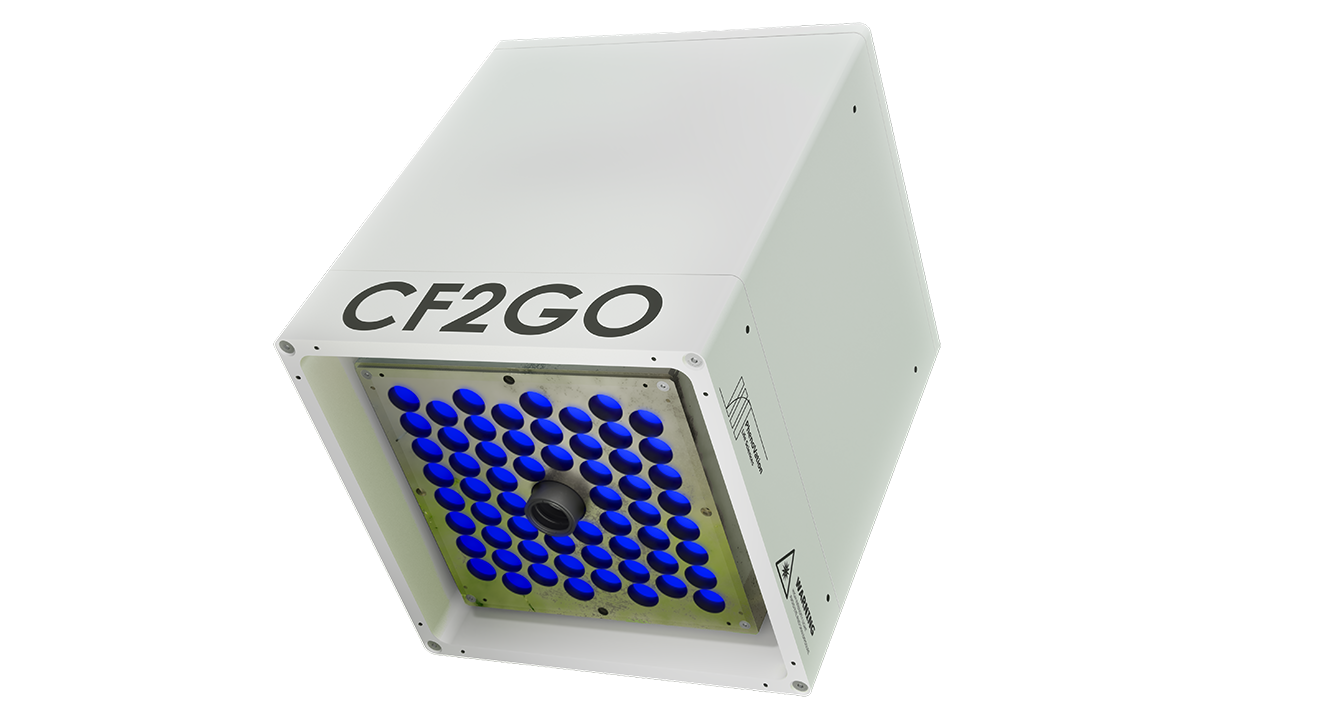
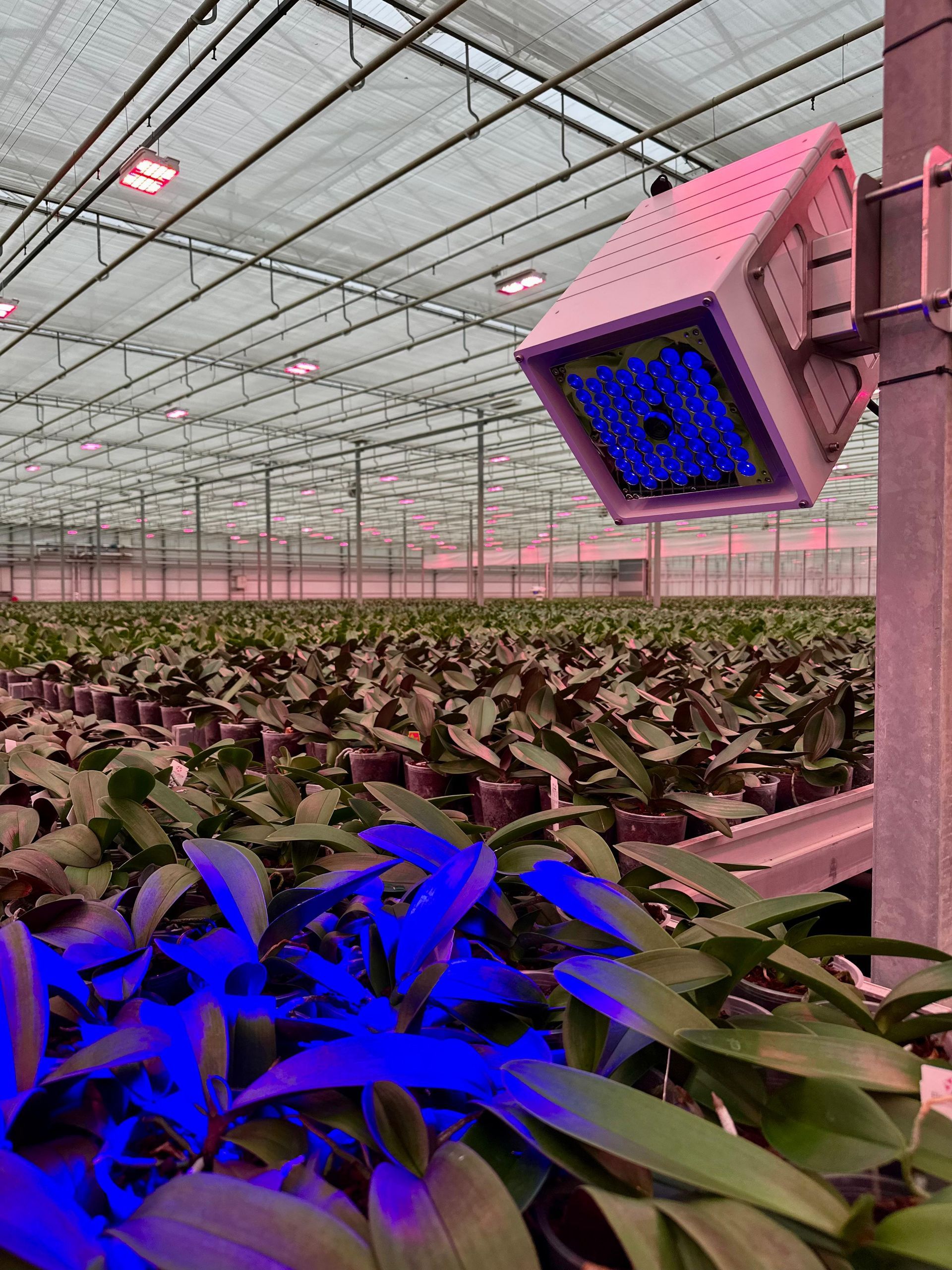
In June, the CF2GO (Chlorophyll Fluorescence 2 Go) was officially launched at the Greentech conference in Amsterdam in the Netherlands, and was nominated out of 47 products for the innovation award by the jury! The CF2GO is our newest camera system capable of measuring real-time efficiency of photosynthesis and plant stress from a distance by capturing chlorophyll fluorescence signals. Its ability to operate 1 meter away from the plant with high accuracy sets it apart from traditional sensors, that often work with leaf clippers. With the CF2GO, we bring the same scientific quality and accuracy as our other systems to the greenhouse. The information that lies in chlorophyll fluorescence has been studied over the last 80 years at universities and research groups. The past ~20 years, this fundamental research has been implemented in practical applications that are used in agriculture (mainly by large breeding companies, multinationals and universities). The integration of this technique into a camera system with a small body that can measure from afar is novel, and marks a new step in the usage of photosynthesis sensors as it makes its way into greenhouses. With real-time data on efficiency of photosynthesis and stress indicators, deeper insights into crop performance can be obtained, enabling more informed decisions in cultivation practices. The camera can be mounted either stationary, or on for instance a robotic arm that moves throughout the greenhouse. The CF2GO is already operational in four commercial greenhouses (two for validation and fine-tuning of the product). In the magazine 'In Greenhouses', or 'Onder Glas' in Dutch, cultivation manager Johan Langelaan from Maarel Orchids explains why they started integrating the CF2GO in their cultivation. He explains: "We can now see in real-time when the plants require more or less light for photosynthesis, allowing us to adjust screening and lighting immediately. We can do this without fear of potential damage from too much or too little light. This way, we get more out of the crop and can grow with greater confidence". Another important advantage they mention is that no interpretation is required: “because you get hard facts and measured values from the system, and you can immediately see what they mean”. Maarel Orchids is now actively working on integrating the measurements with the climate computer to automate lighting and shading controls, which is something that is mostly done manually still. The article can be found at: https://www.onderglas.nl/gewas-krijgt-exact-de-hoeveelheid-licht-die-het-nodig-heeft/ In this blog, I will explore the technical specifications of the CF2GO and how it captures its measurements. I will also showcase data from experiments and real-world examples from greenhouses, demonstrating what photosynthesis and stress data look like and how this information can be used to optimize cultivation practices.
What is chlorophyll fluorescence?
Chlorophyll Fluorescence Measuring Methods