
PhenoShorts
At PhenoVation, we're passionate about advancing agricultural sciences through innovative phenotyping technologies. PhenoShorts is your concise hub for summaries of scientific publications in the fields of phenotyping, photosynthesis, and chlorophyll fluorescence imaging.
Here, we highlight key findings, methodologies, and innovations that drive research forward. Whether you’re a researcher, agronomist, or industry professional, PhenoShorts is designed to keep you informed, inspired, and connected to the latest breakthroughs in crop science.

Climate change is pushing crops to their limits. Drought, salinity, and waterlogging are no longer rare events but recurring challenges that threaten global food security. To breed resilient varieties, we need to see what’s hidden, not just the upper leaves basking in sunlight, but the lower canopy layers where stress responses often begin. Traditional phenotyping tools, like 2D chlorophyll fluorescence imaging, provide valuable insights into photosynthetic performance (e.g., PSII efficiency, or Fq’/Fm’). Yet, they fall short in one critical way: they average values across the entire top-down view, overrepresenting upper leaves and masking the responses of lower, often more stress-sensitive layers.
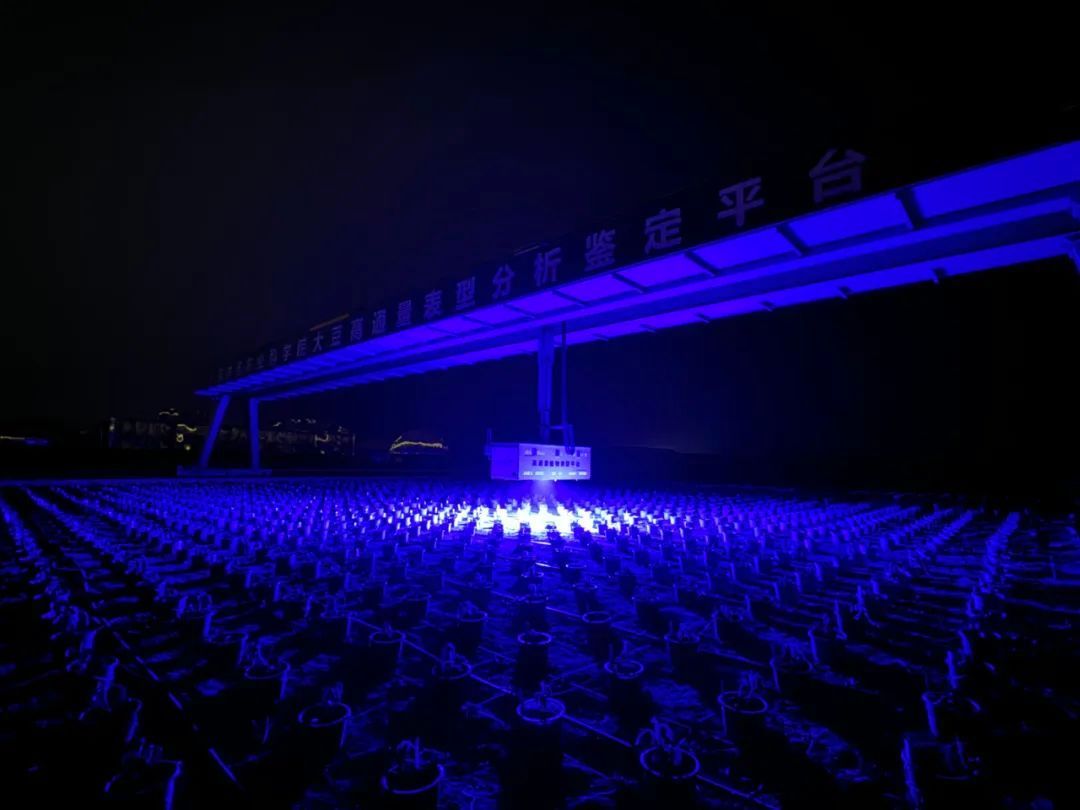
Chlorophyll fluorescence has long been a cornerstone of plant physiology, offering a non-invasive, rapid, and portable way to assess the health and efficiency of Photosystem II (PSII). At its core lies the saturating pulse (SP), a short, intense burst of light designed to temporarily close all PSII reaction centers, enabling researchers to calculate critical parameters like effective PSII yield, electron transport rates (ETR), and non-photochemical quenching (NPQ). These metrics are indispensable for understanding how plants respond to stress, light variability, and environmental change.
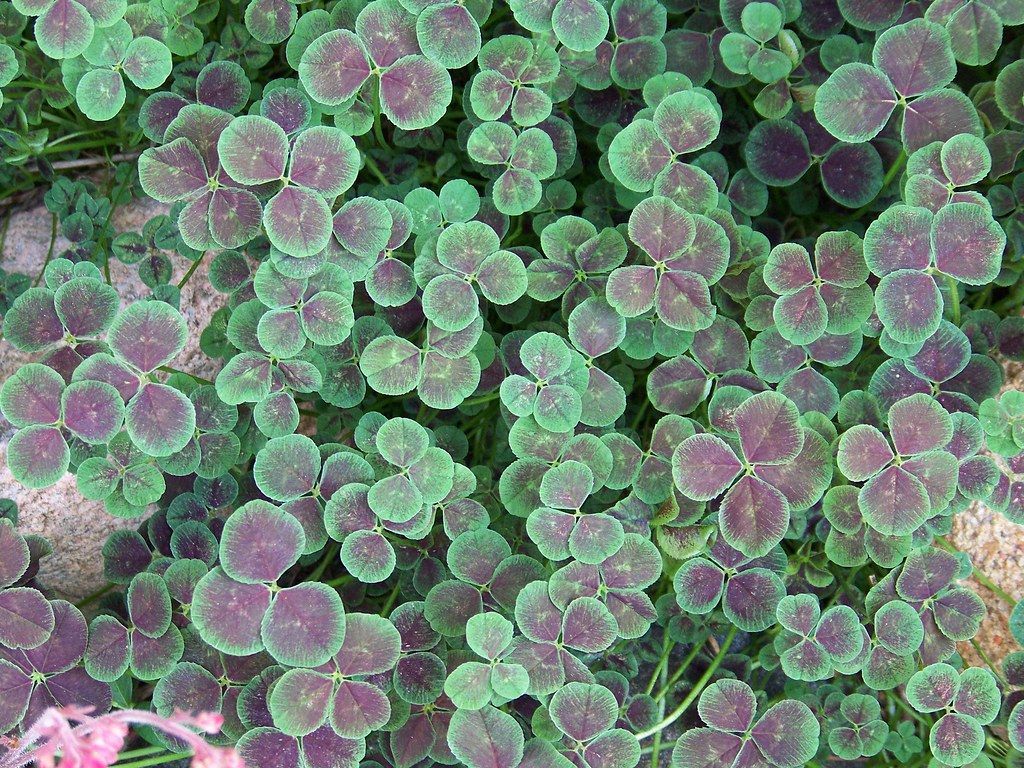
Anthocyanins (Anth) are water-soluble vacuolar pigments in higher plants, responsible for red coloration in leaves and often induced by environmental stresses such as UV radiation, drought, or nutrient deficiencies. Their accumulation serves as a marker for leaf stress and senescence, making their quantitative assessment valuable for understanding plant responses to environmental challenges. However, traditional methods for Anth estimation previously relied on destructive chemical extraction, which was time-consuming and impractical for large-scale or real-time studies. In their 2001 study, Gitelson et al. addressed this limitation by developing a nondestructive, reflectance-based method to estimate Anthocyanin content in intact leaves.
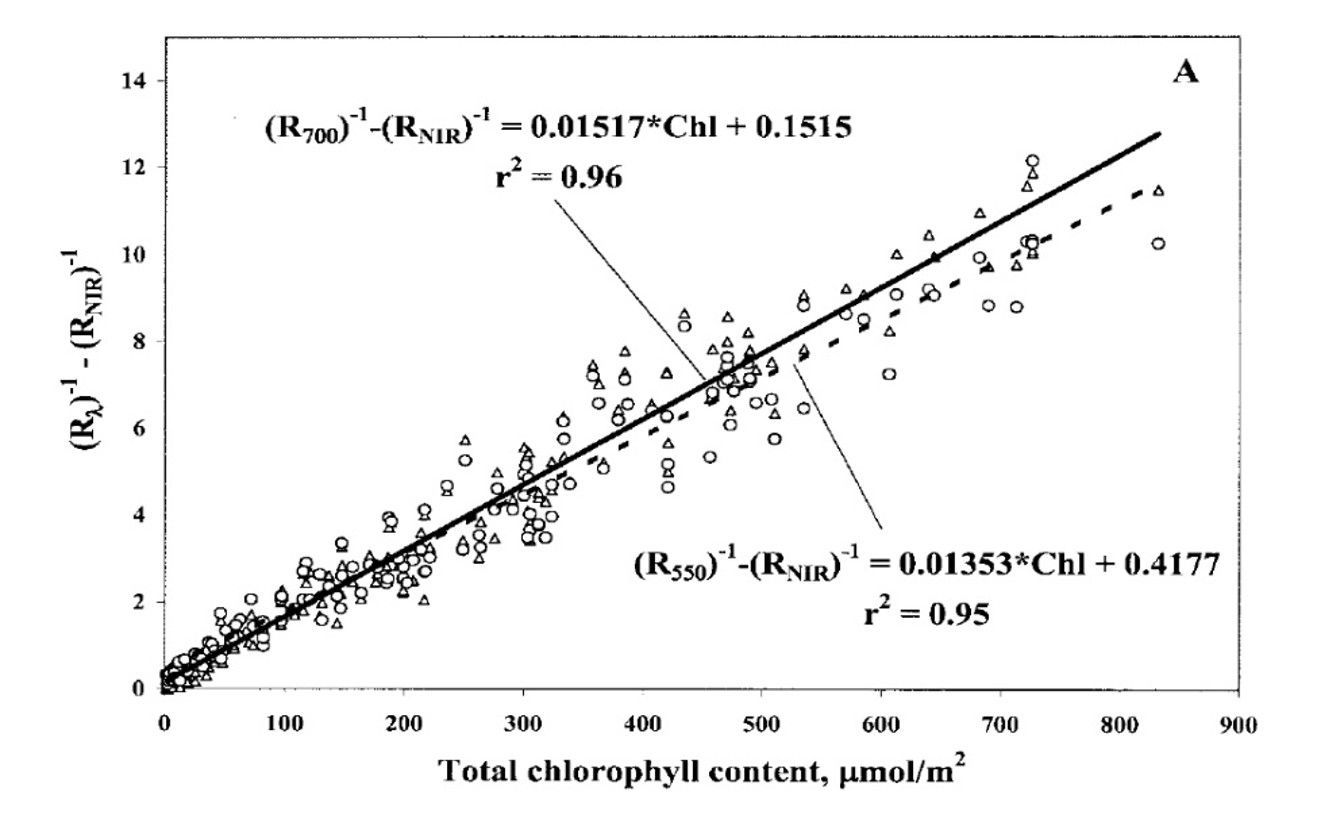
According to Gitelson et al. (2003), the most accurate way to estimate chlorophyll content from reflectance measurements is to use the following algorithm: Chlorophyll Index=(R NIR /R λ )−1 where: R NIR is the reflectance in the near-infrared (NIR) range (e.g., 750–800 nm). R λ is the reflectance in the green (520–585 nm) or red edge (695–740 nm) regions. Gitelson et al. (2003) provide three key reasons for the superior accuracy of this approach: 1. Linear Relationship with Chlorophyll Content The authors found that reciprocal reflectance (R λ ) −1 in the green (520–585 nm) and red edge (695–740 nm) regions is linearly proportional to total chlorophyll content across a wide range of species and chlorophyll concentrations (1–830 µmol/m²). In the blue (400–500 nm) and red (600–680 nm) regions, the relationship is non-linear and saturates at higher chlorophyll levels (>150 µmol/m²), making these regions less reliable for accurate estimation. By subtracting the reciprocal reflectance in the NIR range (R NIR ) −1 from (R λ ) −1 , the authors created an index: [(R λ ) −1 −(R NIR ) −1 ] This subtraction eliminates the intercept (background noise) and makes the index linearly proportional to chlorophyll content across the entire range (1–830 µmol/m²). 2. Correction for Leaf Structure Variations Impact of Leaf Structure: Leaf thickness, density, and internal scattering can vary significantly between species and even within the same plant. These structural differences affect reflectance, especially in the NIR range, where light scattering is dominant. To account for structural variations, Gitelson et al. multiplied the index by R NIR : [(R λ ) −1 −(R NIR ) −1 ]⋅R NIR =(R λ /R NIR )−1 This adjustment reduces sensitivity to leaf thickness and density, making the algorithm more robust across different species and leaf structures. 3. Minimal Sensitivity to Pigment Composition The slope of the relationship between (R λ ) −1 and chlorophyll content is consistent in the green and red edge regions (520–585 nm and 695–740 nm) across different species. In contrast, the slopes in the blue and red regions vary widely, leading to less accurate estimates. The coefficient of variation for the slope of the relationship (R λ ) −1 vs. chlorophyll is minimal (<10%) in the green and red edge regions, ensuring high accuracy regardless of species or pigment composition. The algorithm was validated using independent datasets (maple and beech leaves) and achieved an RMSE of less than 49 µmol/m² for chlorophyll estimation, which is significantly lower than other tested indices (e.g., R 800 /R 680 or (R 800 −R 680 )/(R 800 +R 680 ) ). Gitelson et al. compared their algorithm with several previously developed indices (e.g., Blackburn 1998, Datt 1998) and found that their approach provided the lowest RMSE and the most linear relationship with chlorophyll content.

Rice blast, caused by the fungal pathogen Magnaporthe oryzae, is a major threat to global rice production, capable of reducing yields by up to 50%. Conventional chemical fungicides, while effective, face increasing challenges due to pathogen resistance and environmental toxicity. Meanwhile, magnesium (Mg) deficiency—a widespread issue in intensive agriculture—compromises plant immunity and photosynthetic efficiency. Addressing both disease pressure and nutrient deficiency requires innovative, sustainable solutions. A recent study by Zhang et al. (2026), published in ACS Nano, introduces magnesium-doped zeolitic imidazolate framework-8 nanoparticles (Mg-ZIF-8 NPs)—a dual-functional nanomaterial designed to suppress rice blast and restore magnesium-deficient photosynthesis. This breakthrough offers a promising alternative to traditional agrochemicals, combining antifungal activity with nutrient supplementation.
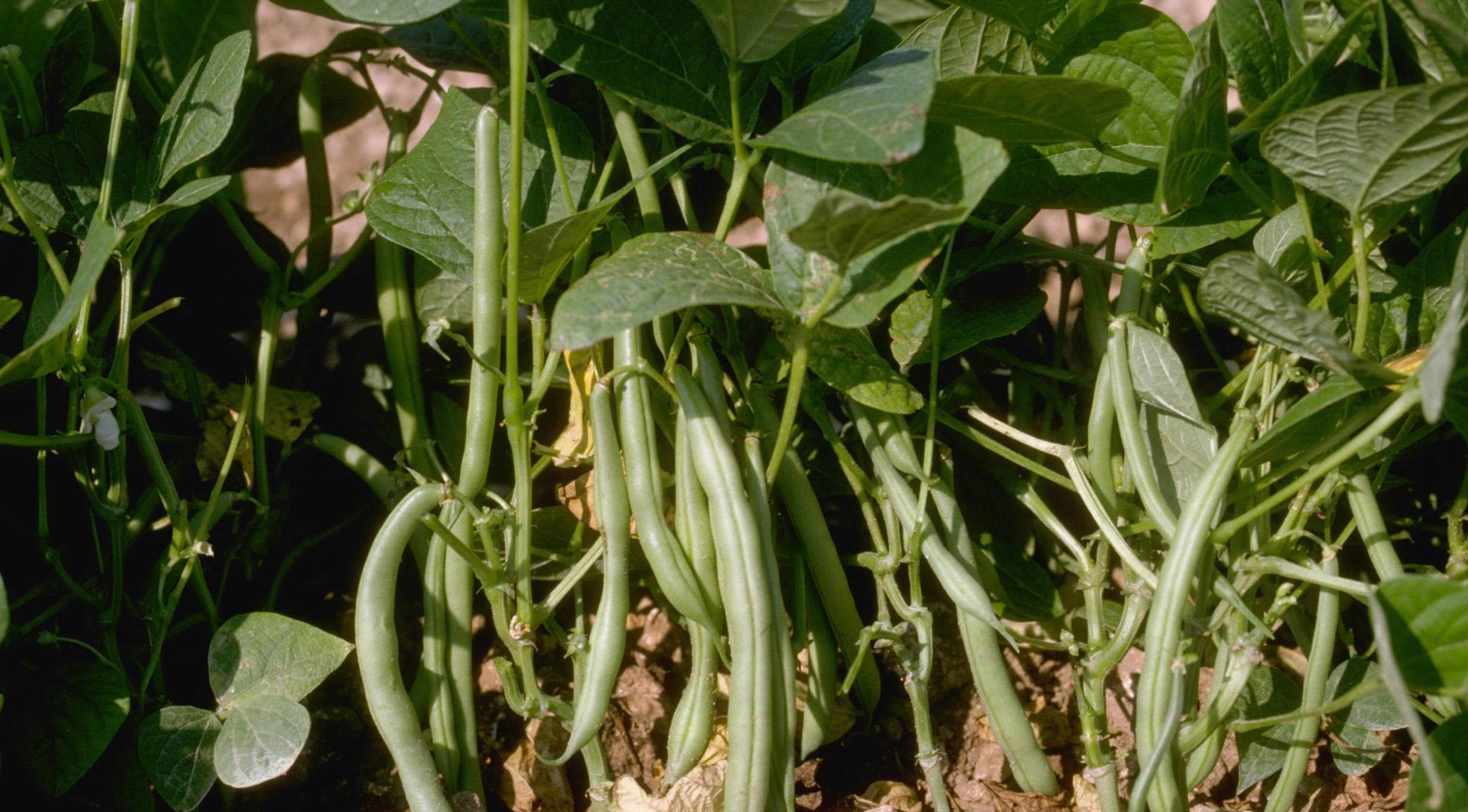
Drought stress is a major constraint on crop productivity, but how plants spatially regulate their physiological responses to water deficit remains poorly understood. While it’s often assumed that drought increases heterogeneity in leaf function, leading to “patchy” stomatal closure and photosynthetic activity—this study challenges that assumption. Using imaging-based phenotyping, the authors reveal that moderate drought in common bean (Phaseolus vulgaris) does not intensify within-leaf heterogeneity. Instead, it promotes a spatially coherent down-regulation of photosynthesis, photochemistry, and optical properties, maintaining functional integrity despite reduced assimilation.
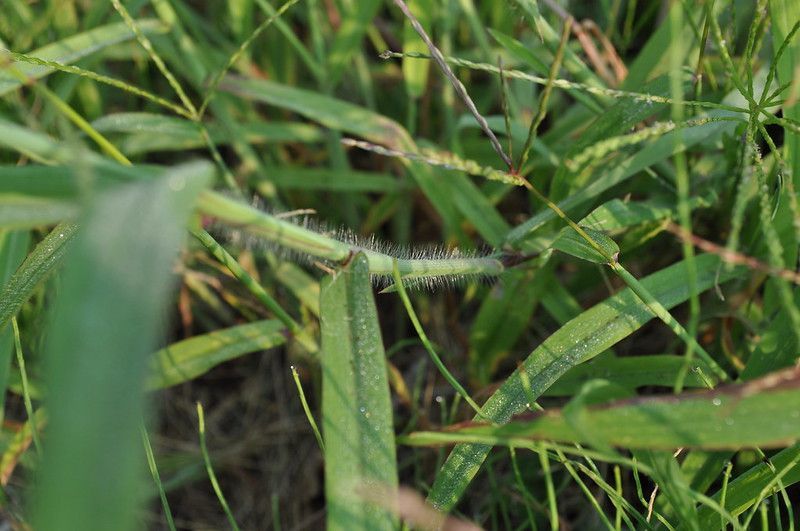
Weeds remain one of agriculture’s most persistent challenges, competing with crops for water, nutrients, and sunlight, often leading to significant yield losses. While chemical herbicides and mechanical weeding are the most common control methods, their precise effects on weed physiology, and how weeds respond to these stresses, have not been fully explored. A recent study by Quan et al. (2023) in Frontiers in Plant Science sheds light on this issue by using chlorophyll fluorescence imaging to monitor how weeds react to mechanical and chemical damage.
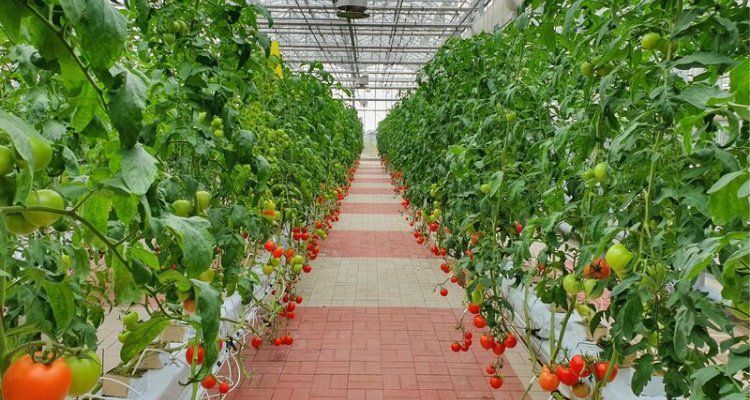
Temporal Regulation of WRKY6 in Solanum pennellii

The Role of UV-A Light in Plant Physiology Light is a fundamental environmental factor that influences plant growth, development, and stress responses. While the effects of ultraviolet (UV) radiation on plants have been extensively studied, the specific impacts of UV-A light (315–400 nm), particularly its wavelength and intensity, remain less understood. UV-A radiation is known to influence various plant processes, including photosynthesis, photomorphogenesis, and secondary metabolite production. Unlike UV-B, which primarily induces stress responses, UV-A can act as a photoregulatory signal, modulating plant growth and development. Recent advancements in LED technology and high-throughput phenotyping have opened new avenues for investigating how UV-A radiation affects plant physiology, morphology, and biochemical composition. These effects of UV-A are highly species-specific, dose-dependent, and influenced by environmental conditions. A study conducted by Vodnik et al. (2023), examines the effects of supplemental UV-A light of different wavelengths (365 nm and 385 nm) and intensities on basil ( Ocimum basilicum L. ). It combines conventional physiological measurements, biochemical analyses, and high-throughput phenotyping to provide a comprehensive understanding of basil’s response to UV-A radiation. Four treatments combine baseline red–blue LEDs with UV-A at 365 nm, 385 nm, or both, at total intensities ranging from 3.5 to 16 W m⁻² (E1–E4). Plant traits are assessed using 3D multispectral scanning, chlorophyll fluorescence imaging using the CropReporter , and biochemical analyses of pigments and phenolic compounds.
The Role of Chlorophyll Fluorescence in Herbicide Screening The global challenge of herbicide resistance, coupled with environmental concerns, has intensified the demand for innovative, sustainable, and effective herbicides. Traditional herbicide discovery methods are often slow, resource-intensive, and environmentally taxing. Multichannel plant imaging, for example chlorophyll fluorescence imaging, can offer a robust indicator of plant health and stress responses. Plant imaging offers rapid, quantitative, and high-throughput screening of novel herbicidal compounds. This approach not only accelerates the identification of promising candidates but also minimizes environmental impact by reducing the need for extensive field trials. Chlorophyll fluorescence , particularly the Fv/Fm parameter, quantifies the maximum quantum efficiency of photosystem II (PSII). Herbicides that disrupt photosynthesis induce a measurable decline in Fv/Fm, making it a powerful early marker of herbicidal activity. This method is highly sensitive, non-destructive, and capable of detecting stress responses before visible symptoms appear.