
A Sustainable Solution for Rice Blast Control and Magnesium-Deficient Photosynthesis
Rice blast, caused by the fungal pathogen Magnaporthe oryzae, is a major threat to global rice production, capable of reducing yields by up to 50%. Conventional chemical fungicides, while effective, face increasing challenges due to pathogen resistance and environmental toxicity. Meanwhile, magnesium (Mg) deficiency—a widespread issue in intensive agriculture—compromises plant immunity and photosynthetic efficiency. Addressing both disease pressure and nutrient deficiency requires innovative, sustainable solutions. A recent study by Zhang et al. (2026), published in ACS Nano, introduces magnesium-doped zeolitic imidazolate framework-8 nanoparticles (Mg-ZIF-8 NPs)—a dual-functional nanomaterial designed to suppress rice blast and restore magnesium-deficient photosynthesis. This breakthrough offers a promising alternative to traditional agrochemicals, combining antifungal activity with nutrient supplementation.

The nanoparticles work by disrupting fungal cell membranes, inducing oxidative stress, and inhibiting the formation of infection structures in M. oryzae. At the same time, they replenish magnesium in rice leaves, restoring photosynthetic function and activating plant defense pathways. The study demonstrates that Mg-ZIF-8 NPs not only reduce disease severity but also improve rice growth under magnesium-deficient conditions, as evidenced by increased chlorophyll content, photochemical efficiency, and vegetative indices.
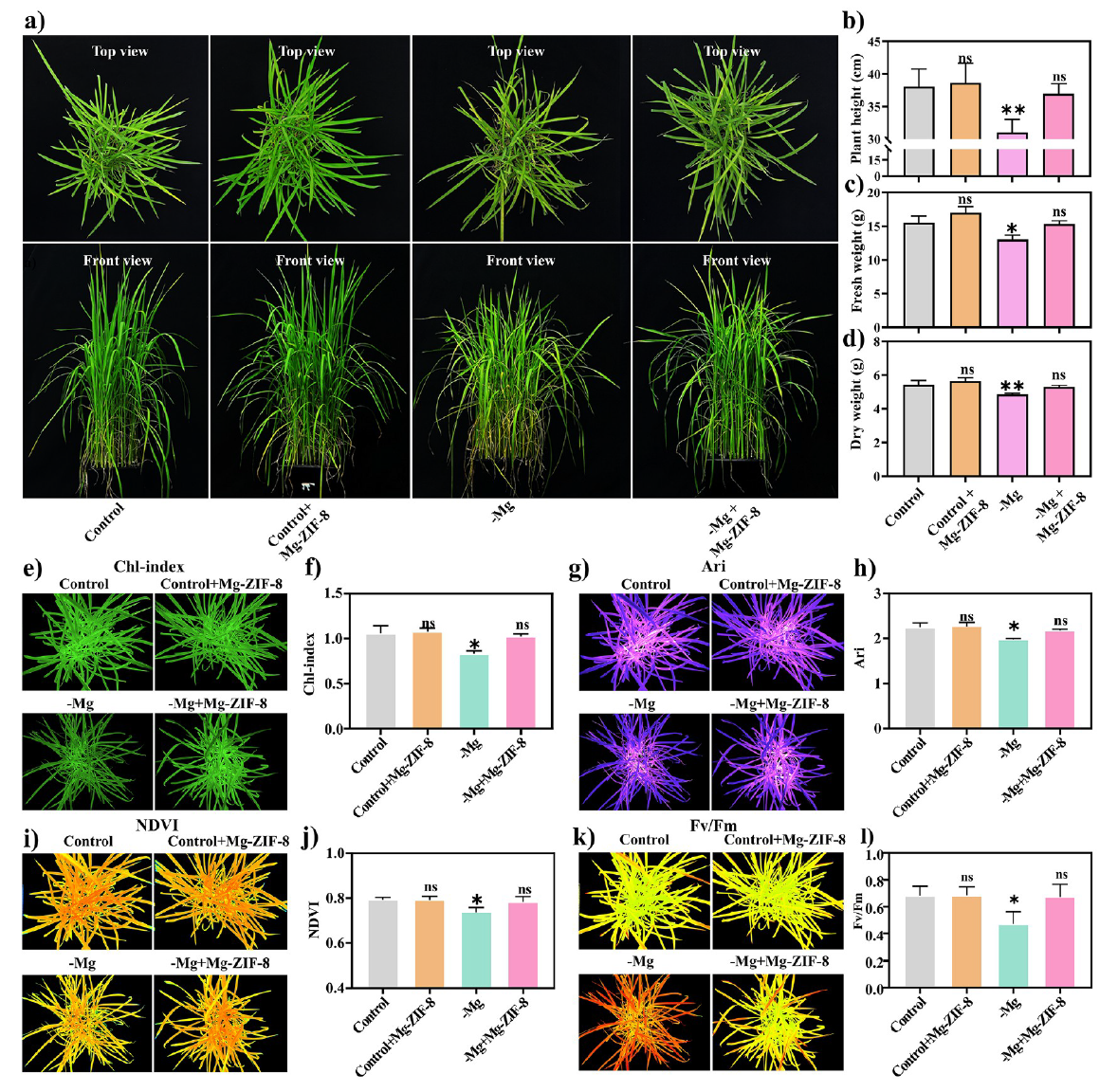
What makes this innovation particularly compelling is its systemic mobility within the plant. Mg-ZIF-8 NPs can be absorbed through both foliar and root application, ensuring targeted delivery to infection sites while minimizing environmental exposure. Advanced imaging tools, such as chlorophyll fluorescence imaging and multispectral analysis, were used to visualize the nanoparticles’ effects on rice physiology, confirming their ability to restore photosynthetic health and reduce stress responses. Biosafety assessments further support the potential of Mg-ZIF-8 NPs as a green nanofungicide. Tests on rice seeds, zebrafish, and earthworms revealed minimal toxicity, aligning with the principles of sustainable agriculture. The nanoparticles’ biodegradability and low ecological footprint make them an attractive option for modern farming systems seeking to reduce chemical inputs.
The study also highlights a paradigm shift in crop protection: the development of multifunctional nanomaterials that address both disease control and nutrient management. As climate change intensifies the pressure on global food systems, such innovations will be critical for optimizing resource use, reducing yield losses, and sustaining productivity under stress. The dual-functional nature of Mg-ZIF-8 NPs not only offers a powerful tool for rice blast management but also sets a precedent for the future of sustainable agriculture—where smart, eco-friendly solutions drive resilience in the face of adversity.
For further details, we encourage readers to explore the original publication:
Zhang, D., et al. (2026). Dual-Functional Magnesium-Doped Zeolitic Imidazolate Framework-8 Nanoparticles for Rice Blast Control and Restoration of Magnesium-Deficient Photosynthesis. ACS Nano 20, 2269–2286.
https://doi.org/10.1021/acsnano.5c17850